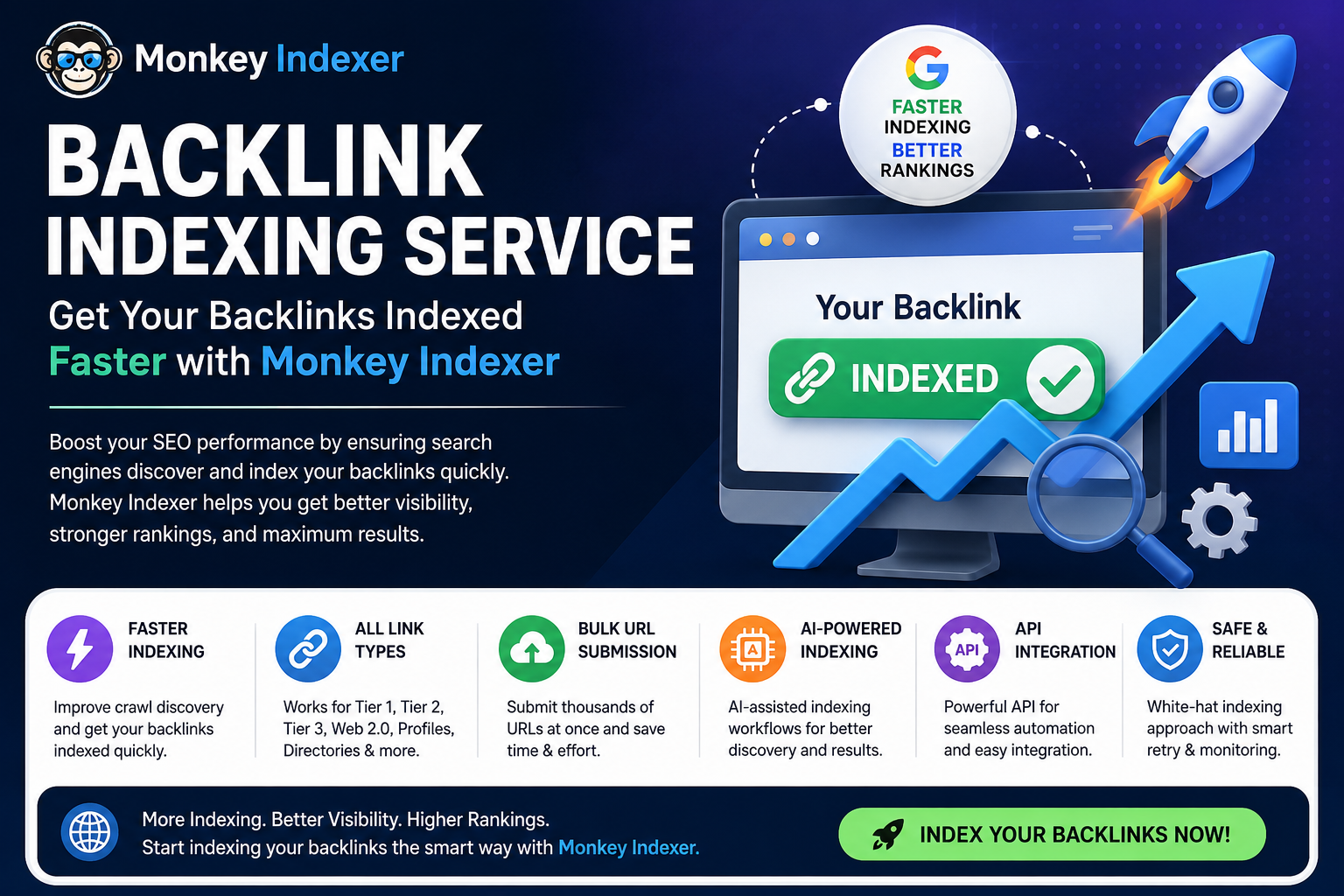
How to Index Backlinks Faster in Google: 9 Proven Methods That Actually Work
Building backlinks is one of the most important parts of SEO, but creating backlinks alone doesn't guarantee higher rankings. Before backlinks can pass authority and contribute to your website's performance, Google must first discover and index the pages containing those links.
This is where many SEO campaigns fail. Website owners spend countless hours building guest posts, profile links, Web 2.0 backlinks, citations, PDFs, and parasite SEO pages without ensuring that Google has actually crawled and indexed those URLs.
If your backlinks are not indexed, they may provide little or no SEO value.
In this guide, you'll learn how backlink indexing works, why backlinks fail to get indexed, and the best methods to index backlinks faster in Google.
What Is Backlink Indexing?
Backlink indexing refers to the process through which Google discovers, crawls, and stores pages containing links pointing to your website.
Once Google indexes the page containing your backlink, it can recognize that link and potentially pass authority and relevance signals to your website.
- Google discovers the page.
- Google crawls the content.
- The page is analyzed.
- Google identifies the backlink.
- The page enters Google's index.
- Link equity begins influencing rankings.
Without indexing, even high-quality backlinks may not provide significant SEO benefits.
Why Are My Backlinks Not Indexed?
Several factors can prevent Google from indexing backlinks quickly.
Low-Quality Content
Google prioritizes useful and valuable pages. Thin content, duplicate content, spun articles, and low-value pages often struggle to get indexed.
Lack of Internal Links
Pages without internal links are difficult for search engines to discover. Orphan pages typically experience slower indexing.
Weak Crawl Signals
Google primarily discovers content through links. Pages with no references from other websites may remain undiscovered for long periods.
Low Domain Authority
Websites with low authority are crawled less frequently compared to trusted domains.
Technical Issues
Server errors, robots.txt restrictions, noindex tags, and poor site architecture can all affect indexing.
Spam Signals
Google may ignore pages that appear spammy or auto-generated.
Why Backlink Indexing Is Important
Backlink indexing is essential because indexed links can:
- Improve keyword rankings.
- Pass authority to your website.
- Increase domain trust.
- Enhance topical relevance.
- Strengthen SEO campaigns.
- Maximize return on investment from link building.
How Long Does Google Take to Index Backlinks?
| Backlink Type | Average Indexing Time |
|---|---|
| Guest Posts | 1–7 Days |
| Business Citations | 1–14 Days |
| Web 2.0 Links | 2–14 Days |
| HTML Pages | 1–10 Days |
| PDF Backlinks | 3–21 Days |
| Profile Links | 7–30 Days |
| Forum Backlinks | 7–30 Days |
9 Proven Ways to Index Backlinks Faster in Google
1. Use a Backlink Indexing Service
One of the fastest ways to get backlinks indexed is by using a professional backlink indexing service.
These services help create crawl signals that encourage Google to discover URLs more quickly.
- Guest posts
- Web 2.0 properties
- Profile backlinks
- PDF files
- HTML pages
- Parasite SEO pages
- Business listings
- Niche edits
2. Build Tier-2 Backlinks
Tiered link building remains one of the most effective indexing techniques.
A Tier-2 backlink points to the page containing your primary backlink rather than directly to your website.
Example:
Tier-2 Link → Guest Post → Your Website
- Tumblr
- Medium
- Blogger
- WordPress.com
- Social bookmarks
- Forum mentions
- Profile links
3. Improve Internal Linking
Internal links help search engines discover content faster.
If you control the website containing the backlink, link to that page from:
- Homepage
- Category pages
- Related articles
- Sidebar navigation
- Resource pages
4. Publish High-Quality Content
Google prefers indexing pages that provide value to users.
- Write unique content.
- Use images and videos.
- Add FAQs.
- Include headings and tables.
- Avoid duplicate content.
- Maintain proper formatting.
5. Share Pages on Social Media
Social platforms can generate discovery signals.
- X (Twitter)
- Tumblr
6. Submit RSS Feeds
RSS feeds remain useful for notifying search engines about fresh content.
- Faster discovery.
- Improved crawl frequency.
- Better automation.
- Additional indexing signals.
7. Use Google Search Console
If you own the website where the backlink exists, submit the URL through Google Search Console.
- Request indexing.
- Monitor crawl status.
- Identify indexing issues.
- Speed up discovery.
8. Build Additional Crawl Signals
The more pathways Google has to a page, the easier it becomes to discover.
- Blog comments
- Forum posts
- Profile links
- Social bookmarks
- Citations
- Web 2.0 properties
9. Avoid Spammy Backlinks
Google often ignores:
- Auto-generated pages
- Link farms
- Duplicate content
- Spam directories
- Low-quality PBNs
Focus on quality and relevance instead of quantity.
How to Index Guest Post Backlinks
Guest posts are among the easiest backlinks to index because they usually exist on authoritative websites.
- Create internal links.
- Share the article socially.
- Build Tier-2 links.
- Submit RSS feeds.
- Use indexing services.
How to Index Web 2.0 Backlinks
Web 2.0 backlinks remain popular among SEO professionals.
- Medium
- Blogger
- Tumblr
- WordPress.com
To improve indexing:
- Publish quality content.
- Add images.
- Create supporting links.
- Share URLs on social media.
- Use indexing services.
How to Index PDF Backlinks
PDF files can rank in Google and pass authority.
- Add internal links.
- Share PDFs externally.
- Build Tier-2 links.
- Use indexing services.
- Submit PDF URLs manually.
How to Index HTML Pages Faster
Standalone HTML pages are commonly used in SEO campaigns.
- Build supporting backlinks.
- Create internal links.
- Share on social media.
- Use RSS feeds.
- Submit through indexing tools.
How to Index Parasite SEO Pages
Parasite SEO pages are often hosted on powerful domains.
- Medium
- LinkedIn Articles
- Tumblr
- WordPress.com
- Substack
Additional crawl signals can accelerate indexing.
Common Backlink Indexing Mistakes
- Building spammy backlinks.
- Ignoring content quality.
- Using duplicate articles.
- Creating orphan pages.
- Expecting instant results.
- Depending on one indexing method.
Frequently Asked Questions
Do backlinks need to be indexed?
Yes. If Google cannot discover the page containing your backlink, that link may provide little SEO value.
How long does backlink indexing take?
Depending on page quality and authority, indexing may take anywhere from a few days to several weeks.
What is the fastest way to index backlinks?
Using a combination of indexing services, Tier-2 backlinks, internal linking, social signals, and RSS feeds usually produces the best results.
Can profile backlinks be indexed?
Yes, although profile links often require additional crawl signals.
Can PDF backlinks help SEO?
Yes. Indexed PDF backlinks can contribute authority and referral traffic.
Are backlink indexing services safe?
Quality indexing services focus on crawl discovery rather than manipulative techniques and are widely used in the SEO industry.
Final Thoughts
Building backlinks is only half the battle. If Google never discovers those pages, your SEO efforts may go to waste.
By combining internal linking, Tier-2 backlinks, social sharing, RSS feeds, and professional indexing services, you can significantly improve the speed at which Google indexes your backlinks.
Whether you're building guest posts, Web 2.0 properties, PDF backlinks, profile links, parasite SEO pages, or HTML pages, making backlink indexing part of your SEO workflow can maximize the value of every link you create.
Consistent indexing leads to stronger authority, improved rankings, and better long-term SEO performance.